

This module highlights co-modal teaching and it provides examples from the specific field “Teaching French to migrants”. It combines theoretical and practical aspects and invites readers to reflect on ways of teaching French to migrants and immigrants. In the first unit, we will address the specific characteristics of adult migrants and immigrants and the teaching methods that result from them. In parts 2 and 3, we will share theoretical concepts and methodological approaches with the aim of developing sequences tailored to the skills being worked on and the needs of the audience. Finally, we will reflect on our role as trainers in adult language education.
Aim
This module aims to equip students with the tools they need to teach French as a foreign language, literacy and illiteracy in France or in a French-speaking context, by offering concrete examples of how to welcome, position, work on oral skills and work on written skills
Learning outcomes
By the end of this module, you will be able to:
- understand the specific characteristics of adult migrants
- identify the language profiles of trainees and their resulting language needs
- understand the value of developing sessions dedicated to working on written or oral skills
- recognise the methodologies underlying the content of literacy textbooks
- reflect on their role as trainers
Target groups
This module is intended for students who are future teachers of French as a foreign language, literacy, and illiteracy in France or in French-speaking contexts. It may also be of particular interest to other education professionals, such as volunteers who provide language support to foreign nationals and language teachers in general.
Module structure and components
The module consists of three units:
- Unit 1 This unit presents the specific characteristics of the migrant population in France that all future trainers or support workers need to be aware of. It offers tools for welcoming them and providing training content tailored to their language needs.
- Unit 2 This unit focuses on oral skills in language training. It offers very concrete tools and methodological approaches for teachers.
- Unit 3. This unit focuses on developing writing skills, particularly approaches and tools for literacy, a vast field in which it is easy for trainers to get lost.
Duration: 8 hours
Materials and resources
The main material for the module is based on a variety of resources:
- Studies, reports and academic articles published by leading authors and national and international organisations working in the field of language teaching
- Videos and audio sources available on the Internet
- Documents provided by local associations and French and Belgian collectives via their official websites.
- Commercially available French language textbooks and learning materials
Unit 1. Specific features of teaching French to adult migrants
The teaching of French as a Foreign Language (FLE) and the teaching of French to adult migrants are “false teaching twins” (Adami, 2005). Indeed, while teaching must be based, as in the case of FLE, on knowledge developed in language teaching and linguistics, the field of teaching adult migrants leads the teacher, whether they like it or not, to teach in an environment “where social, political, didactic and epistemological issues intersect ” (Adami, 2020), and this is what sets it apart.
The learning audience has some essential characteristics that must be taken into account:
- they are immersed in a monolingual environment.
- It is an audience that may suffer from peripheral issues related to migration and/or exile, and some of whom may live in fairly precarious or even unstable socio-economic conditions.
- This is an audience whose motivations and objectives may be intrinsically linked to current immigration language policies.
- This is a fairly heterogeneous group, with different language needs and expectations.
- This inevitably requires adapting teaching methods to the constraints and obstacles to learning, and defining educational objectives that are as closely aligned as possible with the specific needs of learners. We will see how this can be done later on.
However, although adult migrants may appear from this point of view to be a homogeneous group of learners with fairly similar characteristics, there is great diversity in terms of language profiles, language needs and socio-economic backgrounds.
1.1 Characteristics of the target audience
What best characterises language training for adult migrants is often the extreme heterogeneity that can be found among learners within groups. In many training programmes, learners are often grouped together based on their level of spoken French at best, or on purely administrative criteria at worst, thus bringing together learners with very different language profiles. Rarely are language placements based on individuals’ previous levels of education, yet this is an essential factor to consider when adapting teaching methods to learners’ profiles. Other factors must also be taken into account, such as social background, sociolinguistic background and length of stay in France.
Level of education
It is not uncommon today in adult migrant training programmes for people who have never been to school in their own country to be studying alongside people who have completed higher education. This heterogeneity can pose real problems when we consider the differences in learning strategies between the two profiles. Literate learners can easily transfer the skills they have acquired in their first language to writing, whereas illiterate people quickly find themselves at a disadvantage (we will look at the specific characteristics of so-called “alpha” people in another chapter).
This inevitably affects the quality of the teaching provided and the pace of learning within a single group.
Social background
Intercultural issues are often discussed in language teaching, and this component is widely documented in FLE textbooks, which readily take into account the different nationalities and origins that may be present in a group. However, the different social backgrounds of learners are under-represented or even completely absent. As a result, the educational content offered generally corresponds to a typical FLE learner profile, whose cultural habits may be far removed from the reality of adult migrants depending on their social background. The educational activities in FLE textbooks therefore frequently address leisure activities such as cinema or music, and some tasks focus on activities such as booking a hotel room or writing a postcard. However, we know that these habits are not shared by everyone, depending on their culture and, above all, their social background. It is therefore necessary for teachers to take this into account in order to adapt their activities to the different profiles of their learners.
Previous sociolinguistic background
It is common to reduce the learner’s language repertoire to their origin alone, without taking into account the range of languages they actually speak. However, their knowledge of each of these languages represents a number of “bridges” that the teacher can use to facilitate learning and understanding. Very often, adult migrants come from countries where an official language coexists with a multitude of minority languages, as is the case in some African countries, for example. In addition, many learners have had to travel through several countries before arriving in France, and some have even lived there for several months or years, which further enriches their language repertoire. It would be a shame not to draw on these newly acquired skills and the metalinguistic knowledge developed on the basis of them.
Length of stay in France and migration plans
Adult education programmes are often very heterogeneous in terms of the length of time learners have been in France, which can vary greatly from one person to another. It is therefore not uncommon to find people who have been living in France for several years alongside others who have just arrived in the same class. However, adult migrants who have been living in the host country for a long time may have developed language skills outside the classroom through acquisition in a social context. While this can be an advantage, it can sometimes be an obstacle when it comes to the ‘fossilisation’ of acquired skills. Over the years, people have learned incorrect linguistic structures, but these work well enough to make themselves understood in everyday life. The formulations then become crystallised and it becomes difficult for learners to correct them.
The migration project is also an important factor to take into account, as it often differs from one learner to another. Some adult migrants have not explicitly chosen to settle permanently in the host country, and France is only a stepping stone in their plan to move to another country. This can affect their motivation to learn the target language and their willingness to engage in training.
1.2. Different language profiles
While all these characteristics often make training programmes for adult migrants very heterogeneous, the main feature that differentiates learners from one another is still their language profile. In any case, it is this feature that will require the most adaptation of the teaching methods used.
Several language profiles can be identified:
- FRENCH AS A FOREIGN LANGUAGE (FLE)
These are people who have been educated in their mother tongue and are learning French as a foreign language. They are often quite independent and use the processes already established in the language of schooling to learn the target language. There are different approaches:
- FLS (French as a Second Language): an approach aimed at people who do not have French as their mother tongue but who are nevertheless in close contact with the French language (as in the Maghreb countries, for example).
- FOS (French for Specific Purposes): a pedagogical approach aimed at acquiring language skills in professional or training communication situations (vocabulary adapted to the professional environment).
- FLI (French for Integration): aims to combine everyday use of the language with learning the tools for successful integration into French society (including adherence to the customs and values of the French Republic). They focus on speaking and reading, without neglecting writing – see Summary of the FLI Reference Framework, (https://parlera.fr/wp/wp-content/uploads/2012/09/FLI-Le-R%C3%A9f%C3%A9rentiel.pdf)
- LITERACY
These are people who have had little or no schooling (less than two years), either in France or in another country. We prefer to refer to people in a “situation” of illiteracy. This is a snapshot of the learner’s situation at a given moment in time, but one that may change as the learning process progresses. Thus, a person may not be illiterate their entire life. Literacy is a first experience of learning to read and write in a formal context.
- POST-LITERACY
“Post-literacy” is a term used to describe illiterate people who have already started or completed a training course (sociolinguistic workshops, training organisations, etc.) and who have acquired the basics of written language without yet being fully independent.
In both cases, the person does not have a command of written French, but may be perfectly capable of speaking it. Progress can be quite slow due to a lack of learning reflexes and cognitive strategies, or linguistic fossilisation if the person has been living in France for a long time. These individuals often have little autonomy in their learning, but are often very eager to learn and take training courses (need for remediation).
- ILLITERACY
Illiteracy refers to French-speaking individuals who were educated in France but do not have sufficient mastery of the basic skills necessary for written autonomy.
In general, progress is often slow, in stages of learning, with a great need for reassurance and limited autonomy.
In summary, within the same group, it is possible to encounter:
1) Learners who have been educated in their own country and can:
- read and write in their own language,
- know one or more foreign languages,
- speak French or not,
- have completed higher education.
2) Learners who have had little or no schooling in their country and who may:
- not know how to read and write in their own language
- BUT speak French (at different levels) and other foreign languages
3) Learners who have never attended school, speak one or more languages and have no knowledge of French
=> All these learners have different needs when it comes to writing: they are not taught French in the same way.
1.3 Identifying language profiles
Each language profile therefore requires an adaptation of the teaching method. Indeed, a person learning French as a foreign language, at level A1 for example, who has oral and written needs in French, will not have the same learning profile as a person who is perfectly fluent in French but is otherwise illiterate. It is therefore advisable to form groups with similar levels and learning objectives as often as possible. But then, how can we be sure of correctly identifying these different profiles? What methods should be used?
It is often during the initial intake interview, at the time of enrolment, through various questions and a written language assessment, that we can obtain the information we need to determine the learners’ previous level of education, which will enable us to identify illiteracy, for example.
Ultimately, if there were only one question to ask during interviews, it could be this: has the person ever been to school?
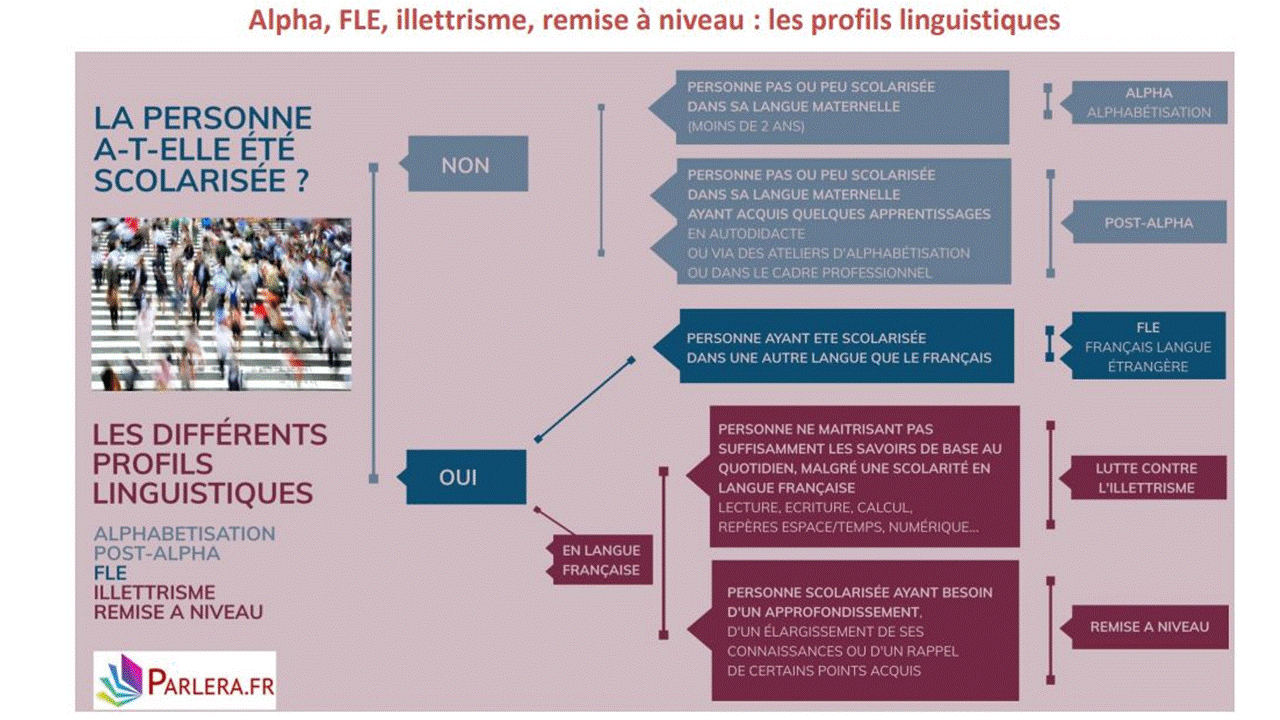
“https://parlera.fr/wp/wp-content/uploads/2023/04/FR-Parlera_23_Profilslinguistiques.pdf
A more in-depth investigation through a series of questions such as “How long have you been living in France?”, “Did you attend school in your country of origin?”, if so, “for how long?” or “until what age?” and “in what language?” will help to determine the person’s level of schooling and define their literacy level.
If the registration form is in paper format, we also recommend that the person fill in the “identity” section (surname, first name, address, telephone number, nationality, year of arrival in France). Capital letters, non-linear writing, copying their surname and first name from an identity card are all clues that will enable the trainer to identify the person as illiterate. Conversely, if the person completes the form without any difficulty (except, in some cases, with the assistance of a translator), this will be a sign that they have had previous schooling or training (i.e. FLE, illiteracy or post-alpha profiles). Questions about previous schooling and background are there to refine the assessment.
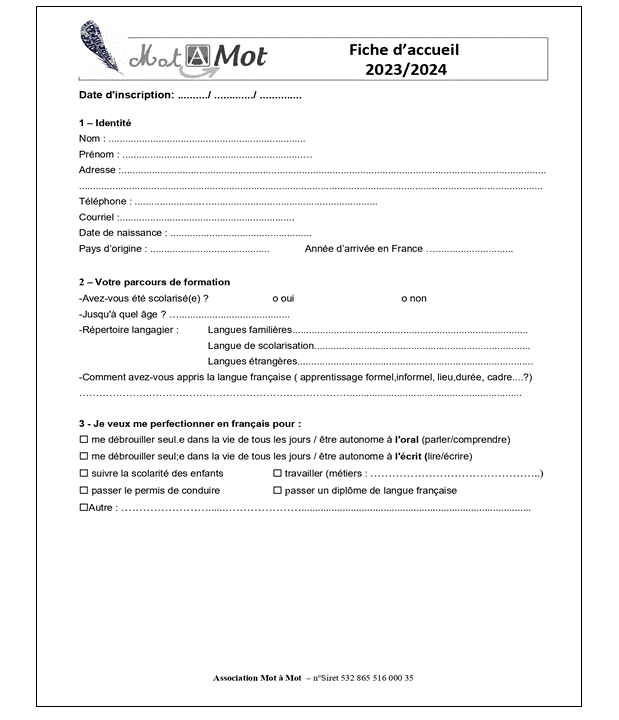
Photo credit: materials from the Mot à Mot association, Marseille. https://www.associationmotamot.org
This questionnaire can be supplemented with a language assessment to refine the learner’s level in their language profile.
Here is an example of initial positioning in writing proposed to beginners in writing at the À VOIX HAUTE association, which runs sociolinguistic workshops for adult migrants in Marseille, at the time of registration:
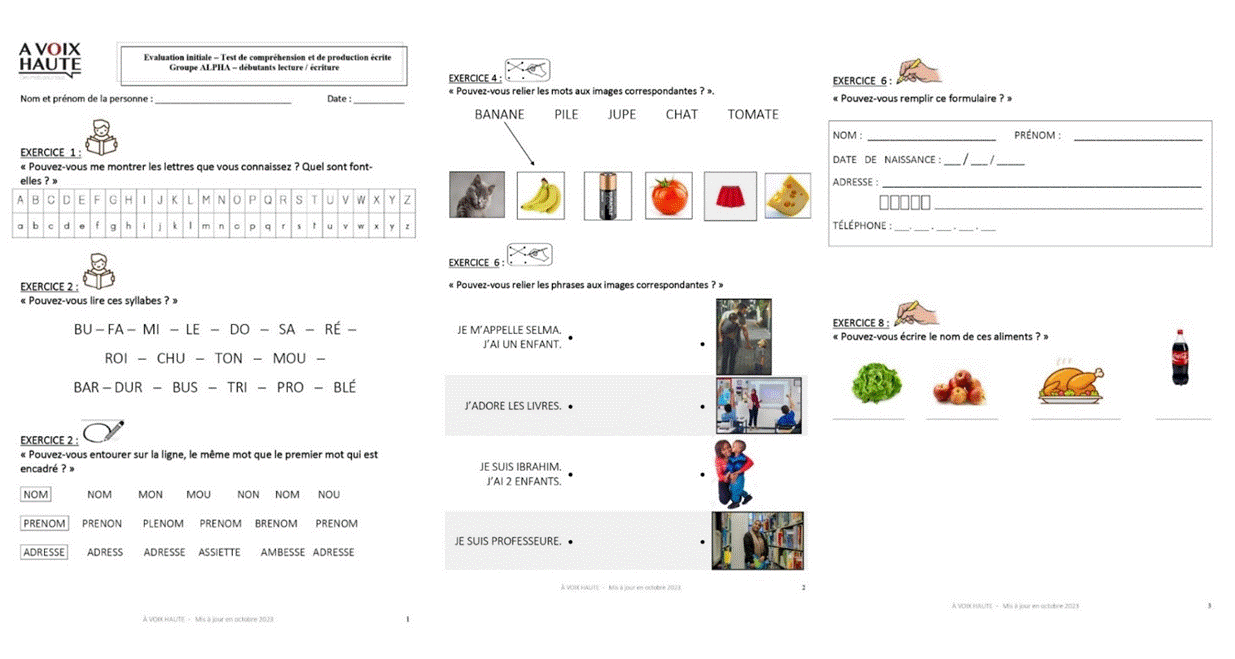
Photo credit: materials from the A Voix Haute association, Marseille. https://www.associationavoixhaute.com/
1.4. Assessing linguistic and digital needs
Once the language profile has been identified and, ideally, groups with similar objectives and levels have been formed, it is important to then focus on the linguistic needs of the individuals. Due to their particular learning context, adult migrants often have specific needs that focus on the immediate use of the language in everyday life. Adults, precisely because they are adults, also have a greater need to make sense of what they are learning and to understand why they are studying a particular subject.
Learning French, but to do what? To communicate with whom?
It is often enough to ask them the question and listen to them. Some will want to learn French specifically to enter the workforce, others to communicate with doctors, find or discuss housing issues, and finally, some parents want to learn French to better communicate with their children’s school and thus follow their education.
There are four main linguistic needs:
- Professional needs
- Personal needs
- Needs related to citizenship
- Daily needs
It is therefore advisable to survey learners directly about their needs and to use their requests as a starting point for building the learning programme. This can be done as a group during an initial session, using images that each represent a specific communication situation in an everyday context: government offices, hospitals, banks, etc.
Using the images, each learner is invited to express their language needs and explain the communication situations they still find difficult, with the ultimate aim of promoting their independence in their daily lives and dealings in France. A vote will be held to choose a theme. The proposed voting system is a stick vote, with each learner having 5 virtual sticks to distribute. Each person can choose two themes from among those proposed and must prioritise them: they allocate three sticks to the theme they wish to work on as a priority and two sticks to the theme that is important but slightly less of a priority. They can also choose to allocate all five sticks to the same theme.

Photo credit: materials from the A Voix Haute association, Marseille. https://www.associationavoixhaute.com/
Identifying learners’ language needs in different communication situations is therefore essential. But in this digital age, developing learners’ autonomy in the use of connected devices is becoming an equally important component: learning French to use the telephone/tablet/computer.
This is a recurring request from people who are illiterate and want to become more independent and be able to use their phones to carry out everyday and/or parenting tasks.
Online procedures have added an extra layer of difficulty for learners with little or no schooling, who regularly have to call on third parties or public writers to complete their online applications or simply to monitor their children’s schooling via applications such as Pronote, for example.
In this sense, incorporating a “digital” theme into training programmes for adult migrants can be very relevant in combating the exclusion they suffer.
Example of initial positioning on digital skills (source, https://www.lesbonsclics.fr/fr/ressources-pedagogiques/diagnostic-imprimable-trame):

Unit 2. Focusing specifically on oral skills as a skill in their own right
Socialised and educated in a context where writing is omnipresent, we have acquired learning habits that generally favour writing, both in terms of reception (reading) and production (writing). Indeed, during our school years, we were introduced to languages through writing.
When designing teaching activities, these habits form a foundation that we draw on, whether we are aware of it or not. However, it is important to question the respective places of oral and written language in adult education, as they will have consequences on the ways in which language is taught.
We will begin by explaining why it is important to distinguish between oral and written work, and what pitfalls this helps to avoid. We will then share some principles, lesson plans and tools for teaching oral skills without resorting to writing.
2.1 Why teach oral skills without using writing?
As we have just mentioned, in France, the use of writing is omnipresent. Whether it is to make a purchase, find your way, look up information, apply for benefits, rent accommodation, open a landline or mobile phone account, sign up for an activity, etc., we are all confronted on a daily basis with different types of writing, from the shortest to the longest, both to read and to produce. For teachers who have been acculturated to writing from an early age, have had a long education, and who navigate these multiple daily written documents with relative ease, it may seem natural to consider writing as absolutely necessary, even paramount, in any formal learning process.
It is necessary to question this assumption, as it affects the way learners with limited writing skills are viewed and the consequences of this view on the educational response offered. Due to the predominant importance of writing in French society, there is a tendency to view adult learners with poor writing skills as people with limited abilities in all areas. By looking at them solely from the perspective of what they cannot do, we overlook all their other achievements, whether oral skills or learning habits, including non-academic ones. Instead of taking the time to carefully assess their profile and skills, their short or even non-existent schooling is considered to be the source of their limited skills at all levels.
This approach will lead to various difficulties. The first arises when forming training groups. Using the written skills of adults seeking training as the main criterion for grouping, learners are divided according to the following logic. Learners who are literate and have also acquired a minimum level of French language skills (e.g. A1) are placed in the same group, often called “FLE” or “advanced”. All others are placed in another group, called “beginner” or even “alpha”, which brings together literate learners who are complete beginners in oral French on the one hand, and learners with poor writing skills regardless of their oral skills on the other.
In this configuration, the so-called “advanced” group has a fairly typical FLE profile, which will undoubtedly not confuse the teacher. The so-called “beginner” group, on the other hand, brings together a wide variety of language profiles and thus poses many more difficulties, both for the trainer and for the learners who make up the group.
By using learners’ writing skills as the main criterion for forming groups, we are condemning ourselves to creating groups that result in an inappropriate teaching approach for a (large) proportion of learners, which is likely to generate frustration , absenteeism and even dropouts. In other words, approaching language learning based on the criterion of written “proficiency” amounts to excluding part of the group, namely those who did not have the opportunity to attend school in their own country and therefore did not have access to written language.
In order to best meet the needs of those seeking training, it is therefore crucial to form groups that take into account the language profiles of learners in greater detail, distinguishing in particular between oral and written needs.
In training structures where this is possible, we therefore suggest opening up registration for one or more groups whose explicit objective is to work on oral skills, and one or more groups whose explicit objective is to work on written skills. The common denominator among participants is then no longer focused on “beginner” status, but on a common need and objective. In this case, bringing together different language profiles poses fewer difficulties: by checking in advance (during the intake interview) that all participants share, for example, the need and goal of improving their oral skills, and by establishing the principle that the course will not focus on written skills, it is possible to bring together literate learners, learners who would typically be classified as FLE (French as a foreign language) learners, and learners with limited written skills.
If the size of the organisation allows, learners can of course be divided into several oral working groups, taking into account their level of oral competence and even the main social areas in which they aim to improve.
If the organisation of the structure or programme does not allow for groups to be formed according to this principle, it should be applied when subdividing the class into subgroups. In any case, it is important to avoid homogenisation at all costs and to recognise the achievements of the participants in the training programme. By doing so, the teacher will be able to better identify and take into account explicit needs, be more precise in the pedagogical responses put in place, and also build on these achievements to better support the learners’ progress.
Applying this principle encourages teachers to reduce the use of written material as much as possible when developing oral skills. While this may seem necessary for learners who are less proficient in writing, this approach encourages all learners to listen fully, focusing their attention solely on the oral channel. Although the presence of written material may seem reassuring, especially for learners who are used to a school-based approach, the use of a questionnaire tends to complicate the task for them: by asking them to select the correct answer, fill in a word or group of words, or summarise a statement, they are forced to pay attention not only to the recording being played, but also to the written tasks they have to complete. However, illustrations can be used to support listening and check comprehension.
It should also be noted that by reducing the use of written material, the classroom exercise more closely resembles an authentic situation, in which the spoken word is far from always being supported by the written word. This way of working therefore allows learners to practise in conditions that are closer to what they may experience outside the classroom, thereby reducing any apprehension that may be generated by the authentic situation.
For learners with a school background, this type of activity, which requires them to trust their memory skills, may be a new way of acquiring a foreign language orally, contrary to their previous habits. The teacher will then need to ensure that these learners participate in the activity without trying to discreetly take notes while listening, while reassuring them about their listening and comprehension abilities. Conversely, learners with limited writing skills are generally very comfortable working on their oral skills without resorting to writing. Many of thes s are multilingual and therefore already have learning habits, even if they are not aware of them, based on this way of working.
The principle of distinguishing between oral and written language proposed here encourages teachers to consider oral language in all its dimensions, thereby restoring the importance of working on the linguistic component of oral language. Here again, academic habits lead us to consider that activities involving grammatical and even lexical conceptualisation and systematisation are best carried out in writing. However, this method of working is not suitable for learners who are not well equipped in writing, who then find themselves excluded from these aspects of linguistic work.
Furthermore, confining grammatical activities to written forms can be an obstacle to taking into account the morphosyntactic specificities of oral language, such as the disappearance of the negative particle ‘ne’, the absence of subject-verb inversion in interrogative forms, or the omission of the pronoun “il” in presentative structures (“il y a” before “y a”). On the contrary, doing this work orally allows the linguistic and sociolinguistic components of language communication skills to be articulated from the conceptualisation and systematisation stages onwards.
Finally, practising at least as much orally as in writing facilitates the mobilisation of knowledge and skills in oral communication situations, thus reducing the gap that may exist between a learner’s ability to complete a written grammar exercise without errors and that same learner’s ability to reuse the same linguistic structures in authentic situations.
The points outlined above naturally require trainers to be open to new ideas and inventive. Most of the textbooks and workbooks available on the market reproduce the school habits of combining effective learning with the need for written support, making it difficult to find teaching activities that do not focus on written materials.
In order to guide teachers in this work, we offer examples of how to organise lessons and teaching approaches.
To complement and support our comments, we invite you to listen to Victoria Juanis talking about oral teaching methods:
2.2. How can oral skills be developed without resorting to writing?
2.2.1 Organisation and content of the sequence
The type of work we will detail in the rest of this module aims to explicitly work on all components of communication skills, using only oral language. To build a sequence, the teacher or trainer must therefore begin by choosing a situation that he or she considers relevant to work on with the group following a needs assessment. They must then analyse this situation to identify the speech acts (pragmatic component) that this situation involves, the lexical and grammatical resources (linguistic component) necessary to perform these speech acts, and the communicative uses (sociolinguistic component) that this situation highlights. However, some of these speech acts, linguistic resources and sociolinguistic uses may be common to situations worked on previously: the new communication situation then provides an opportunity to review and deepen certain content, according to the principle of spiral progression, which reinforces learning and encourages the transfer of knowledge from one sociolinguistic situation to another.
In order to clarify the issues at stake for both the teacher and the learners, it is necessary to identify, for each session, the objective and the component(s) of communication competence on which the work will focus.
Following the principle that linguistic resources serve comprehension and expression, learners will first be presented with one or more recordings, which they will work on in terms of comprehension. Several sessions will then be devoted to acquiring the resources that will ultimately enable learners to produce or interact in turn. It is important that activities inviting learners to produce or interact at length only occur at the end of the sequence, once the teacher has provided them with the necessary resources to do so: the last session(s) thus constitute a practical application of all the resources seen in the previous sessions through a role-play aimed at practising realistic production or interaction.
Within a sequence based on a theme, the following work times can be distinguished:
- oral comprehension, pragmatic component
- lexical work, linguistic component
- phonetic work, linguistic component
- grammar work, linguistic component
- work on language usage, sociolinguistic component
- oral production or interaction, pragmatic component
During sessions devoted to working on linguistic resources, do not hesitate to provide context by reminding students of the link with comprehension and production/interaction sessions: “I am learning… to say/do/be able to…”.
2.2.2 Tools to facilitate avoiding the use of writing
To facilitate oral sessions without resorting to writing, two elements seem particularly helpful: illustrating oral content with carefully chosen images and the layout of the training room.
Illustrations (drawings, photos) will replace written material. These images can play three distinct roles: illustrating the overall communication situation, clarifying the meaning of a word or statement heard in the recording, or triggering and supporting everyone’s participation in the discussion. In the absence of written material, they will be the only visual aid shared by the group. They will constitute a lasting resource on which to draw. Particular care must therefore be taken in their selection, and consideration given to how they will be used.
Images are not always as transparent as we think: interpreting them sometimes requires a certain number of codes or cultural references that help to construct a shared meaning. The way in which we mentally represent a concept or an abstract idea can vary from one cultural area to another, and even from one individual to another: some images whose interpretation seems obvious to us may be ambiguous or perplexing to others. Experience shows that even a common graphic representation such as rain drawn as broken lines falling diagonally from the sky can pose interpretative problems for people who are less familiar with written language. Furthermore, finding the right image to illustrate abstract concepts, certain ideas or emotions is not always easy: how can we unambiguously illustrate the concept of “quality” or “defect”, or even the notion of “professional experience”?
Finally, the use of emoticons (smileys) to illustrate a feeling, emotion or mood is not always understood by the whole group, as this type of representation is highly dependent on the learners’ digital literacy, which varies according to the age and literacy skills of the participants.
Another tip when looking for images to illustrate vocabulary is to stay as close as possible to the topic being worked on, focusing on concrete representations rather than abstract generalisations. For example, to illustrate the concept of “changing buses” when working on public transport, it is better to use a photo montage showing actual buses rather than an abstract representation of the concept of changing.
Ideally, you should take your own photographs, or have drawing skills or be able to call on someone in your circle who does, so that the illustrations represent the situation or word in question as accurately as possible.
There are royalty-free image and photograph banks on the internet that you can draw on, such as Flickr (https://www.flickr.com/), Burst (https://burst.shopify.com/), Free images (https://www.freeimages.com/fr), Pixabay (https://pixabay.com/fr/) and Fotomelia (https://fotomelia.com/). Some sites require you to register for free beforehand. We recommend that each trainer create their own image bank as the sessions progress, in order to keep the most appropriate illustrations and gradually refine their choices.
Ultimately, whether photos or drawings are used, it will be necessary, prior to the comprehension or expression activity, to take time as a group to describe and explain each image in simple terms in order to reach a collective agreement on its meaning, thereby removing any potential difficulties in interpretation.
In addition to agreeing on the meaning of the photo, this is also a time when, through the description of images, the teacher introduces vocabulary (new words) contained in the audio document in order to facilitate its comprehension.
The image should therefore be a facilitator, not an additional obstacle. For each image presented, the teacher or trainer will invite the learners to observe and then describe orally what they see, in order to build a collective understanding of the image. Although the initial activities may confuse learners, we have observed that the more frequently illustrations are used, the less misunderstandings occur. Gradually, learners develop their ability to make interpretative assumptions and acquire common graphic codes.
A second element will play a facilitating role in the sessions devoted to oral skills: the configuration of the training room. Ideally, training should take place in a room where the furniture can be easily moved around to adapt the layout to the type of activity being offered. It is sometimes better to spend a few minutes moving tables and chairs with the whole group than to be uncomfortable for half a day; reconfiguring the furniture can also be a communicative practice in itself, as it involves communicating in order to cooperate, understanding or giving instructions appropriately, asking for confirmation, making suggestions, etc.
For oral work sessions, we recommend removing (or stacking to the sides) all the tables in the room and leaving only chairs, arranged in a semicircle or in small circles to encourage small group discussions during certain activities. This layout has the advantage of allowing all learners to see each other, making it more difficult to use written communication and facilitating the flow of speech and movement of participants within the space. It is also desirable to have a wall or board on which to display images: care should be taken to ensure that everyone can see this display area, which should therefore be placed opposite the semi-circle.
This specific layout for oral work also allows learners to identify the language activities being worked on, making it easier to identify the different learning stages : when tables are present in the room, written work is being done, and when tables are absent, oral work is being done. Finally, the difference in spatial configuration for oral and written work will change the group dynamic, encouraging learners not to always sit in the same place and/or next to the same participants.
Small tables may be necessary if you do not want to lay out and handle images on the floor or when drawing activities are offered to support oral comprehension. However, seating around large tables should be avoided as much as possible.
2.3 Working on listening comprehension
When expert speakers try to understand an announcement, an interaction in which they may or may not be participating, a broadcast or any other audio or audiovisual document, they are actively engaged in listening. Whether they are aware of it or not, they make assumptions and pick up clues to confirm, refute or clarify them. To make learners effective listeners and help them become autonomous in the situations they encounter, we must therefore encourage them to make assumptions and gather clues: this is known as active listening.
To do this, it is necessary to define, before playing a recording, a specific listening project and objectives that will encourage learners to develop strategies, accustom them to listening with a particular intention, and help them to stay focused: if the instructions given are vague, such as “listen and say what you have understood”, learners’ attention will be interrupted as soon as they encounter the first difficulty in understanding.
In addition, as soon as possible, learners should be asked to justify their answers in order to encourage them to make hypotheses and inferences based on the context, guide them in picking up clues, and possibly remove cultural implicitities that could hinder comprehension. This work on formulating plausible hypotheses will be easier for someone who has previously been to school, but it is an essential skill for illiterate people to develop.
Finally, it is important to encourage learners to first verbalise what they understand (or think they understand), rather than what they do not understand: in order to make hypotheses, we rely on what we understand in order to try to fill in the gaps. Teachers must therefore resist the temptation to explain or translate everything, and instead encourage a collective search for meaning and reassure learners that they do not have to understand everything, as detailed meaning will become clear as they continue to learn.
In practical terms, the work is organised into several phases.
The first phase consists of a general understanding of the document. It is guided by questions, asked before the recording is played for the first time, which lead learners to seek information that will enable them to grasp the overall meaning of the document: who is speaking, to whom, where, when, about what, why? The questions, and possibly the possible answers, can be illustrated with images to aid understanding and memorisation. Before playing the recording, ensure that the meaning of each image is clearly understood by everyone by asking them to describe what is shown. The number of answers provided can then be adapted to the level of the learners in the group.
Who is speaking? To whom?
• How many people are speaking?
• Are they men? Women? Adults? Children?
• What is the relationship between them?
Where is the scene taking place?
Ask them to name each place shown.
When does the scene take place?
• What day?
• In the morning?
• At night?
• In the afternoon?
• In the evening?
What are people talking about? Why / what for?
Depending on the number of learners and their level, the class can be divided into subgroups, and one question can be assigned to each subgroup: while listening, learners will focus on a single question. Finally, the question “Why do they interact?” can be assigned to a subgroup: while listening, learners will focus on a single question.
question to each subgroup: while listening, learners will focus on a single question. Finally, the question “why are they interacting?” can be assigned to a more advanced subgroup if the group is of mixed ability.
The entire document is then played without pause, allowing learners to look for clues to answer the questions asked before the broadcast. If necessary, the recording can be played several times; depending on the participants’ level of comprehension, a discussion can be held after the first listening, and supplemented if necessary after a second listening, or the document can be played twice before the discussion. To facilitate the discussion, do not hesitate to ask, a , after one subgroup has given its answer, whether the other subgroups wish to add anything or whether they agree with the answer as it stands. Finally, if any questions remain unanswered, it is important to play the recording a second or third time: for the group to have a comprehensive understanding, it must have found and understood the answers to all the questions.
This overall comprehension phase is a necessary step at all levels, but its importance for beginners cannot be overemphasised. It provides a guided introduction to the audio document. The illustrations accompanying the questions provide tools to facilitate discussion and help identify the communication situation.
The third phase aims to achieve a more detailed understanding of the document: this is referred to as detailed comprehension. Here again, we do not settle for a broad question, but use activities prepared in advance; however, it is advisable to vary the facilitation methods according to the level of the group.
For complete beginners, images illustrating key moments in the document – for example, the stages of interaction – are used and presented in random order. As in the overall comprehension phase, take the time to describe and identify the meaning of each image: in addition to clearing up any ambiguities, this also provides lexical resources to support comprehension of the document. To facilitate active participation by all, provide several sets of illustrations if there are many learners. During the discussion, the document will be listened to again step by step, checking each time that everyone agrees on the choice of image. To do this, what the learners say will be rephrased and summarised, highlighting what they have understood and the words they have recognised. Before confirming an answer, ask learners to justify their hypothesis: why did they place this image here? What did they hear that led them to make this choice?
For learners who are a little more comfortable, prepare detailed questions with three possible answers. Here too, you can illustrate the questions and possibly their answers.
For the most advanced learners, prepare open-ended questions without suggested answers, and do not use illustrations.
In all cases, before sharing, a second listening session will be offered if necessary, to complete or verify the answers.
Three phases of content assimilation conclude the session. The first is the memorisation phase ( ): this consists of listening to the document again, repeating it sentence by sentence until the learners have completely memorised it.
The meaning of any words that are still problematic is then clarified. This stage helps to consolidate vocabulary and syntactic structures, memorising them by chewing them over: the aim of oral repetition here is therefore to retain the linguistic resources contained in the supporting document used for comprehension.
However, it is up to the trainer to vary the repetition methods in order to avoid boring the group. The following methods can be used: repeating all together; repeating in pairs, speaking at the same time; repeating in pairs, facing each other and looking at each other; repeating in groups of four, speaking at the same time; repeating in turn; repeating in turn while throwing a ball to each other; repeating in whispers. You can repeat statement after statement, or group two statements together, or even group all the statements from the same stage of the dialogue together. As you progress through the repetition, don’t hesitate to repeat from the beginning.
The next step is to reproduce the entire document. In sub-groups containing as many learners as there are speakers in the document, the aim is to reproduce what has been memorised. No particular staging is expected here, so learner- s can remain in their places or act out the scene if they wish. This extends the memorisation of the document’s content by providing a conclusion.
Finally, the last step is a recap/summary phase. The teacher invites the participants to summarise what has been worked on during the session. The images are used as support.
A written record consisting of a transcript of the dialogue accompanied by the images used for memorisation is distributed at the very end of the session.
Which audio materials should be chosen?
Not all oral genres are the same, so there are many different ways to work on them. You can work on dialogical genres, i.e. those involving several speakers (administrative meetings, friendly conversations, interviews, debates, etc.), or monological genres (public announcements, answering machine messages, radio reports, news reports, political speeches, etc.). Short forms, such as public announcements or voicemail messages, have their place in training, especially as they represent authentic situations that learners may encounter, in situations where the stakes can be high (not missing your train or bus, understanding what someone is saying on the phone).
Analysing the characteristics of a document allows the trainer to assess the level of difficulty of the recording for the trainees. Attention can thus be paid to:
- prosodic and phonetic characteristics: speed of speech, standard pronunciation
- the sound context: if the recording has a noisy background (announcement in a station, conversation in the evening, etc.), comprehension is more difficult. An expert speaker knows how to ‘fill in the gaps’ and make relevant assumptions when they have difficulty perceiving certain sounds, for example when they only hear the beginning of a word. For a beginner speaker with a more limited vocabulary, the task is more difficult.
- The number of speakers: a monologue is easier to follow than a conversation involving several speakers, who will position themselves differently, contradict each other, or even interrupt each other.
- Cues relating to the overall communication situation: are there background noises that help identify the location? Do the speakers mention where they are and/or what they are doing (e.g. introductory sentence of a programme)? Are there quick clues that help characterise the relationship between the speakers?
- sociolinguistic register: standard, formal, informal? Public or private sphere? Depending on the sociolinguistic habits of the learners, they will be more or less familiar with the register of the document.
- The length of the document: logically, a long document requires more concentration than a short one.
- The language structures used: are they common and/or already familiar to learners? Are they very similar to written language (in which case the spoken language is written language spoken aloud) or are they spontaneous spoken language?
- the vocabulary: is it common and/or already known to learners? Is it concrete or abstract?
- the sociocultural knowledge and implicit assumptions necessary to understand the recording.
- In the case of an audiovisual document, does the image support the understanding of what is heard? Does it add content?
In conclusion, in order to help learners become autonomous in oral communication, care should be taken to use materials from a variety of genres (advertisements, recorded messages, interactions, broadcasts, etc.) that are authentic or close to authentic situations, rooted in context, and in which the speakers are pursuing one or more communicative goals. It is also preferable to expose learners to recordings featuring different speakers, in order to train them to understand different voices and different ways of speaking.
2.4. Working on linguistic and sociolinguistic components
When addressing the teaching and learning of the linguistic component of communication skills, in other words grammatical, lexical, phonetic and spelling rules, etc., there are generally two approaches: the deductive approach and the inductive approach.
The approach proposed here is inductive in nature and conducted solely orally. It is common to lexical, phonetic, grammatical and sociolinguistic work. The inductive approach emphasises the learner’s discovery of regularities based on examples of language production. In this approach, the teacher’s role is to select and compile language material, preferably authentic: the teacher thus builds up a corpus that enables the learner to identify regularities concerning a particular point, and guides them more or less closely towards the discovery of these regularities. The result may be a table of forms or an explicit conceptualisation using metalanguage. Once this work has been done, we can move on to a phase of training and systematisation using exercises.
We outline the steps here.
The first stage of the work consists of the learners discovering the corpus. This corpus of words or statements, which will form the basis of the session, has been carefully prepared in advance by the teacher or trainer and is presented in the form of illustrations only.
Depending on the objective of the session, the facilitation methods may vary. If the aim is to work on very specific statements, the illustrations can be laid out on a table around which the learners are gathered, and they can be asked to point to the illustration corresponding to the statement made by the teacher. The teacher will have prepared the statements according to their objective, for example, the contrast between affirmative and negative forms, or between the present and past tenses. If you are working on isolated lexical items, for example to highlight a phonological contrast, you can distribute an image to each learner and simply ask them to name what is in it.
As the learners discover the corpus, the teacher establishes groupings: they arrange the images for all to see, often in columns. Thus, if their objective for the session is to distinguish between the present and the past tense, they display all the images showing an action in the past on one side and those representing an action in the present on the other. If they are working on the phonetic distinction between [a] and [ã], they place images of words containing the sound [a] on one side and those containing the sound [ã] on the other. Please note: this entire stage takes place without the teacher explaining the principle behind their classification. They therefore establish the classification themselves, without saying why they are placing a particular image in a particular place, even if a learner asks the question.
We then move on to a phase of observation, induction and conceptualisation of regularities. The teacher invites the learners to observe the classified corpus and to hypothesise about the reason for this classification. To do this, they repeat the words or statements aloud, column by column, until the learners manage to find the classification criterion(s). If necessary, they do not hesitate to prompt the group by asking what is the same on one side and different on the other, whether the learners hear the same thing when they repeat, etc.
This step is important because it puts learners in a research mode: they formulate hypotheses, which will subsequently be confirmed or refuted. It is a structuring phase during which the group moves from observation to conceptualisation – without necessarily resorting to extremely precise grammatical terminology. Learners listen, compare, verbalise and share their thoughts, thereby strengthening their ability to analyse the language material they are confronted with.
The third stage focuses on systematisation and appropriation. Training activities are offered in sub-groups or as a whole group. The activities have a playful dimension (e.g. memory, mistigri): through repetition, they aim to help learners memorise and automate regularities.
The fourth phase focuses on transposing and reusing the regularity that has just been discovered, either in the same thematic context (guided reuse) or in another context (free reuse). Learners thus consolidate their knowledge by generalising it. It is also important to encourage learners, especially if there is not enough time to develop this phase, to reuse what they have just seen outside the training session, in everyday situations.
As with the listening comprehension sessions, we end with a summary phase. The teacher or trainer finally closes the session by distributing a written summary.
2.5. Working on oral production and interaction
As mentioned above, the session(s) devoted to oral production or interaction take place at the end of the sequence or after several sessions: learners’ contributions will thus be informed by the work on language resources carried out in previous sessions, which gives them something to say and the means to say it. If learners are asked to produce from the beginning of the sequence, the teacher cannot see what has been acquired, but only what the participants already know how to do – or what only some of them have the courage to show. These moments are generally disappointing, as the contributions are often unsuccessful; they also risk reinforcing forms of hierarchy within the group, leaving room only for those who already know how to do it. It cannot be overemphasised how important it is for the teacher or trainer to carefully prepare production or interaction sessions, which should be designed as a practical application of all the linguistic, sociolinguistic and pragmatic tools provided, in a communication situation that has been worked on in advance in terms of comprehension. Role-playing in interaction or continuous speech production activities thus conclude the sequence.
Our proposal is therefore to devote sufficient time to working on a production or interaction activity, during which we will methodically work on the standard framework for the targeted production or interaction, as well as on the possible formulations at each stage of this framework – all with a view to memorisation. If we want learners to be able to independently recall what they have learned in an authentic situation after the session, we cannot simply settle for a quick practical exercise in class. When working on a spontaneous, unprepared situation, it is also essential to resist the temptation to have the interaction written down in advance: although written material may seem very reassuring in class for learners who have mastered the codes, it does not effectively prepare them to cope outside the classroom without preparation time. In fact, the ability to feel comfortable speaking in an unprepared everyday situation can be developed and improved through practice. Overcoming the fear of making mistakes, accepting that you may not have prepared a perfect sentence before saying it, becoming quicker to speak, managing the frustration of not being able to express yourself as well in the target language as you would in your first language(s), daring to speak in a situation where you have not understood everything, knowing how to ask your interlocutor to repeat, clarify, rephrase, slow down, or knowing how to say something differently when you can’t make yourself understood: all of this can be practised. It is therefore important to regularly put learners in situations of interaction or spontaneous production in various simulated situations.
It is also necessary to play down the importance of mistakes: mistakes are in fact a tool for learning and teaching, a marker of ongoing acquisition, and not a source of shame to be avoided at all costs. The perception of mistakes may therefore need to be worked on with learners. For their part, teachers must also learn to distinguish between mistakes that need to be corrected as a priority and those that do not: the more a mistake hinders understanding, the more urgent it is to correct it. The focus will therefore be on first assessing the success of the interaction (pragmatic component) and the appropriateness of usage and formulation (sociolinguistic dimension), considering linguistic errors in terms of whether or not they hinder understanding of the message being conveyed. Finally, during practice, production or interaction will not be interrupted, but notes will be discreetly taken on what needs to be reviewed later.
In training, the main objective of oral practice sessions will therefore be to encourage learners to communicate as naturally and authentically as possible, but also to offer them a space where kindness is the norm, where risk-taking is possible, and where mistakes are considered necessary and normal in the learning process. The steps of a typical session are detailed below.
The first phase of work consists of revisiting what has been covered during the sequence, i.e. the previous sessions: the aim is to get the group to collectively summarise the main content. The idea is to encourage learners to recall the activities they have done, the components they have worked on (listening comprehension, language structures, vocabulary, phonetics, grammar) and the content they have acquired; the teacher can use the display that has been created as the learners have acquired new knowledge (during the sessions). Learners can also be encouraged to use the written notes distributed during the sessions, which they will have brought with them.
Next, a warm-up for the body and voice is suggested as an introduction to the session. The aim is to put everyone at ease, get them moving, loosen their tongues and prepare them for activities involving oral production or interaction. To do this, we use short exercises taken from theatre methods (Activités théâtrales en classe de langue – techniques et pratiques de classe, A. Payet, Clé International).
The third step consists of presenting the communication situation that will be worked on. The announcement is made by the teacher or trainer, who invites learners to talk about their experiences in relation to this situation: have they ever been confronted with it? How did it go? Did they have difficulty understanding? Expressing themselves? In what way? This time is also an opportunity to review the vocabulary and structures learned in previous sessions: do learners remember words or phrases that are useful in this situation?
We then move on to the collective reconstruction of the interaction or production. In order to be autonomous after the session, learners will need to master the structure of the interaction or production on the one hand, and the appropriate formulations corresponding to each stage on the other. If the sequence is constructed according to the recommendations above, the type of interaction or production expected here will have been worked on beforehand during a listening comprehension session: we will therefore draw on what the learners have memorised and use the session to structure and enrich what they have learned.
To facilitate this stage of the work, the teacher has a set of illustrations corresponding to the framework of the expected interaction or production, which must therefore have been analysed beforehand during the preparation of the session. The teacher also needs a board or a section of wall on which to display the images as they are used. Initially, the teacher keeps the images in their hand without showing them to the learners and invites them to reconstruct the production or interaction: what can or should be said in the proposed situation? When a learner suggests a statement that corresponds to an expected step, the teacher validates the answer by showing the corresponding illustration. Depending on the level of the group, the teacher asks the group if the same thing could be said in another way, in order to enrich the exchange and engage the more advanced learners more specifically. The image is then hung up for all to see. As the images are displayed, the teacher ensures that the steps are shown in the correct order. At the end of this activity, the group has a complete overview, visible to all, which will serve as a reference for the next phase of work.
The teacher then allows time for memorisation, which is necessary for the success of the practical phase that will follow. Through repetition, the teacher ensures that everyone can learn the phrases that the group agreed on when reconstructing the outline. The teacher will vary the repetition methods (see the section on working on listening comprehension) to avoid boredom.
Finally, we move on to the last stage, role-play: we will put the framework and phrases we have just worked on into practice in a scenario similar to an authentic situation that could be experienced outside the classroom. The aim is to make learners autonomous in the role they play in their daily lives: if the situation being worked on involves a doctor, a CAF agent or a sales assistant, the teacher or trainer will take on these roles, while the learners will play the patient, the beneficiary of family allowances or the buyer. This division of roles will also allow the trainer to decide whether to stick to the script or add questions based on the comfort level and ability of each learner participating in the role play.
The room can be arranged and a few objects brought in to recreate the atmosphere of the place where the interaction takes place. Only volunteer learners will act out the scene; however, it is possible to include other members of the group in the scene as extras: other patients in the doctor’s waiting room, passers-by in the street or other passengers on public transport. Learners who are not included in the scene will observe. At the end of each production or interaction, the teacher will ask the group one or two questions to check their understanding of the message or exchange that took place. If necessary, they will correct one or two incorrect phrases, having the whole group repeat them. They will also ensure that, if necessary, the learners review how to say that they do not understand, or how to ask the other person to repeat, rephrase or slow down.
2.6 Leave with a written record
In this module, we have emphasised the need to work on oral and written skills separately, and have attempted to propose tools to support the acquisition of oral communication skills without relying on the participants’ unevenly developed written skills. However, at the end of the session, it is a good idea to distribute a written record, which will serve as a reminder for those who wish to have one. Whether we like it or not, the absence of written notes sometimes gives participants the impression that the group did not really work during the session, or that the work done was not very serious. It is therefore essential to give learners a handout that summarises the content covered during the session. This material must be illustrated with the images used during the session, so that beginner readers and writers can grasp it more easily: they will be able to remember the content studied by recognising the images seen during the session. Care should also be taken with the layout of the page, so that the correspondence between images and text is as clear as possible.
For an oral comprehension session, for example, the transcript of the dialogue could be distributed, illustrated with the images from the session that were used to memorise it. In order to facilitate independent reading for beginner readers and writers, we recommend transcribing the dialogue in capital letters. We also suggest sending the audio version of the dialogue via WhatsApp or other messaging services.
For a vocabulary lesson, the written record will contain illustrations accompanied by the corresponding word or phrase, always in capital letters for beginner readers and writers. For a phonetics session, the words will be classified in columns according to the phonemes being worked on. For each word, the illustration and its written transcription will be included. After a grammar session, the written record may include the corpus observed and manipulated by the group during the first stage of the session. Care should be taken to illustrate each statement with an image. For a sociolinguistic work session, the written record will include the elements of the corpus, classifying them in columns according to their context of use. For each word or statement, the illustration and its written transcription will be included. Finally, for an oral interaction session, the structure of the interaction and the different formulations chosen by the group for each stage of the framework should be included. We will therefore start with a blank written record on which only the images illustrating the stages of the framework are printed, and we will complete the document with the statements that were proposed during the session. If there is no immediate access to a photocopier at the end of the session, we can initially provide only the images, in the order of the outline, without the statements, since the learners have memorised them during the session; we will then give them the complete written record at the next session. Again, capital letters and a division into meaningful groups should be used for beginner readers and writers.
Unit 3: Working specifically on writing, tools for literacy Your Heading Text Here
After demonstrating in Unit 2 the importance of working on oral skills without resorting to writing, in this final unit we propose to focus on working on writing skills, particularly for an audience in a literacy situation.
In order to develop the writing skills of an illiterate audience, it is necessary to allow for differentiated teaching times within the class group, as the teaching/learning activities involved in the literacy process are very different from those intended for an FLE audience. For some, it is a question of entering the world of writing to discover its codes (learning to read and write in a foreign language, namely French); for others, it is simply a question of transferring their knowledge of the written code of their first language to a foreign language, namely the one they are learning, in this case French.
We have therefore chosen to devote this last section exclusively to introducing literacy to an illiterate audience. We are setting aside materials intended for learners of French as a foreign language, as we believe that the existing teaching resources for this audience are widely available and well catalogued. On the other hand, the world of literacy is vast and it is very easy to get lost in it.
We will begin with a brief historical overview of literacy, highlighting the evolution of approaches and definitions. We will then explore the fundamentals of reading and writing, defining the mechanisms involved in these activities. Finally, we will share tools and methods that we consider effective for teaching reading and writing to adult learners. Before concluding the unit and module with a bibliography and list of useful websites, we will discuss the role of the adult literacy trainer, providing practical advice on how to foster an environment conducive to learning.
3.1. Literacy: evolving approaches and definitions
Historically, in the 1950s, the term “traditional” or “school-based” literacy was used. In 1958, UNESCO adopted this initial definition: “A person is illiterate if they cannot read or write, with understanding, a simple and short statement relating to their daily life.”
Everything was done as in a school system (materials used, programme content, assessment methods). The approach focused on the processes of decoding and encoding reading and writing, disconnected from other skills. This approach implied a rigid programme, based on the idea of mass literacy, whereby as many people as possible had to be taught to read and write without any differentiation: everyone had to have access to the same thing.
This definition has been questioned and has evolved. In the 1960s and 1970s, the term ‘functional literacy’ came into use. In 1978, UNESCO proposed a new definition: “A person is functionally illiterate if they cannot engage in all the activities that require literacy for the effective functioning of their group or community, and also to enable them to continue reading, writing and calculating for their own development or that of their community.”
Functional literacy refers to the skills necessary for active integration into society, particularly the world of work. It is therefore the idea that literacy has a very concrete objective, a very utilitarian approach. The focus of learning to read and write has shifted towards its functional aspect in relation to everyday life, with the underlying idea of a need for oral and written survival skills. The references are everyday life and working life. The entry point is no longer the code of written language as such ( ). The basic materials become documents from everyday life. It is a definition that combines educational and economic aspects: literacy for everyday life as a citizen, parent, worker, etc.
In the 1970s, another approach to literacy emerged: conscientising literacy, which aims to raise awareness of oneself as a subject. The leading author on this subject is Paulo Freire: “No one educates others, no one educates themselves alone, people educate each other through the world” (Freire, 1974).
Here, literacy is just a means to an end; it is not an objective in itself. The goal is political and philosophical: individual liberation and co-education. It is a militant approach. This approach starts from the world and experiences of illiterate people. It is based on an egalitarian relationship between teacher and learner in order to encourage the emergence of critical thinking skills, which can transform reality. We must rely on ‘doing with’ rather than ‘doing for’ in order to help learners exercise their critical skills, speak out and position themselves as citizens.
These three approaches still exist simultaneously today. We have tools at our disposal that are in circulation.
There has been an attempt to respond to this trilogy of approaches with the concept of situational literacy. It focuses on two types of literacy: functional literacy and Paulo Freire’s literacy of consciousness. It is considered a global educational activity whose starting point is the situation of populations and their living conditions. It is considered that programmes and content are not the same depending on the context (literacy is not taught in the same way in France as in Brazil).
What is emphasised in this definition is that literacy is a fundamental right. The approach is not focused on the code, the economy or the person as a citizen, but on the notion of rights. Literacy refers to a contextualised social practice, to the needs of the community, but also to the identification of problem situations.
It is the idea of literacy that is integrated and not isolated; it is part of a process. It is a question of identifying situations that constitute problems for the target audiences and defining content (including learning to read and write).
There is therefore the idea of plural literacy. The approach aims to bring about social change and learning.
Finally, today, the term used to refer to literacy is ‘literacy‘.
In 2013, the OECD defined literacy as “the ability to understand, evaluate, use and engage with written texts in order to participate in society, achieve one’s goals and develop one’s knowledge and potential.“
(https://www.oecd.org/fr/competences/piaac/sample%20items_all_fr.pdf)
We can also refer to the definition provided by Jaffré (2004), a linguist specialising in written language, which has the advantage of including all the meanings attributed to literacy: “Literacy refers to all human activities that involve the use of writing, both in reception and production. It brings together a set of basic linguistic and graphic skills for use in technical, cognitive, social or cultural practices. Its functional context may vary from one country to another, from one culture to another, and also over time.”
Reading and writing are thus linked within the same concept and can therefore only be considered in relation to the contexts in which they occur.
These considerations have implications for the teaching of reading and writing. In particular, they require a constantly renewed consideration of practical in a context where writing tasks and skills are becoming increasingly complex.
With time and the contribution of literacy, literacy has therefore come to cover other aspects of the relationship with the written word: “Literacy is not, or no longer, limited to learning the basic mechanisms of decoding and encoding graphic signs: literacy is a process of acculturation to writing, the aim of which is not only technical mastery of the graphic code, but also, and above all, its social, practical and symbolic use and mastery.” (Adami, 2009)
What we can take away from the evolution of these different approaches and definitions is that literacy is a multidimensional activity. Reading and writing should not be viewed solely as a technical skill, but rather as something that encompasses various aspects (social, cultural and ethnographic) and is part of specific contexts that must be taken into account.
3.2 What is reading and writing?
As the contribution of literacy has shown, studying the learning of reading (or ‘decoding’) independently of that of writing (or ‘encoding’) would be meaningless.
It can only be analysed in the context of many interrelated aspects, which is why the Alpha Collective sought to produce a definition that would take this complexity into account. It begins with a simple statement:
“Everyone agrees that reading is understanding a message composed of written signs. These written signs are words, formed with 26 letters and arranged in a certain way in a given space on a given medium, such as a sheet of paper or a screen…” (Michel, 2013)
Reading is therefore indeed the understanding of a written code. But for this code to make sense, reading requires certain skills: “You have to be able to recognise words quickly, you also have to know the letters and how they come together to form syllables, which you have to be able to decipher if you don’t recognise the word directly.” (Michel, 2013)
On the one hand, reading mobilises the memory’s ability to visualise words; on the other, it requires the reader to be able to transform signs into sounds in order to produce words, in other words, to decipher them. Added to these skills is the ability to “implement strategies to derive meaning from this written code. Indeed, reading is not just about decoding signs one by one, it is about articulating these signs to extract meaning from them, it is about constructing a mental image of what we are decoding” (Michel, 2013). The reader must be able to actively access the meaning of the code they are confronted with.
The Alpha Collective concludes its definition as follows: “Finally, reading is inseparable from writing. By writing themselves, readers put the different dimensions of reading into practice and thus integrate them all the better.” (Michel, 2013)
Being a reader therefore requires being impacted by the world of writing. Learning to read cannot be separated from learning to write. One cannot be done without the other, even if learning to read is generally easier than learning to write.
3.3 Reading and writing mechanisms
There are many different methodologies for developing reading and writing skills. They differ from one another in terms of their bottom-up, top-down or interactive approaches to writing.
3.3.1 The phonics approach
The most traditional approach is to teach reading by focusing on sounds and phonemes. Schools refer to this practice as the “b, a, ba” or syllabic method. It is one of the oldest teaching methods in modern schools, developed by Pastor Stuber in 1762. More popularly known as the “Boscher method” since 1906, it is recognised for its logical progression and step-by-step approach to autonomy and fluency in reading. Starting with the sounds of letters, pupils learn to associate them, then read syllables and gradually words, even those that are not meaningful to them.
Linguistically, this system consists of associating graphemes with phonemes. Once simple syllables have been assimilated, the decoding of compound sounds is tackled, with two then three letters (the “oin”, “eau”, “ill”, etc.). However, it can take time for automatic responses to develop, for the reader to spontaneously “recognise” certain words without having to decipher them each time, and we do not have that time in adult education.
In French language teaching, this is referred to as the “bottom-up” approach (Cornaire, 1999), because it starts with low-level units such as code, spelling, words and sentences to arrive at meaning through decoding.
3.3.2 The meaning-based approach
The meaning-based approach, generally presented as an alternative to the previous one, emphasises “global acquisition”. In French language teaching, this is referred to as the ‘top-down’ approach, as it is based on the principle that ‘comprehension is a process of continuous development and verification of hypotheses’ (Cornaire, 1999).
The reader formulates hypotheses about the meaning of the text based on clues. This model is based on a global approach, whereby context defines the meaning of a word. Sound is therefore irrelevant in this approach, which favours visual memorisation.
It is also known as the global method. It aims to teach reading without going through the automatic and oral mastery of letters and syllables.
The advantage is that words are approached without having learned syllabic sounds. Learners quickly gain early reading skills, which can be a source of motivation.
The disadvantage is that they do not gain complete autonomy, as they cannot decipher unfamiliar words.
3.3.3 An intermediate approach: the interactive approach
Each of these two approaches has its pitfalls, as they do not address the written world in its entirety. The bottom-up approach to learning to read, which focuses on the phonetic aspect of the written world, could cause the learner to lose sight of the search for meaning. Conversely, the top-down approach could lead them to stray too far from the text itself.
The interactive approach combines syllabic techniques with the speed of whole-word reading. The principle of this method is to ensure that learners are no longer passive, but actively construct an overall understanding.
- F. Cicurel (1991) defines it as follows: “The interactive approach aims to promote the reader’s receptivity to the text. This receptivity is optimised if, before and during reading, the learner is encouraged to produce hypotheses and anticipatory ideas, partly thanks to the knowledge they have stored in their memory, which needs to be ‘reactivated’ (both encyclopaedic and linguistic knowledge). This creates an interaction between what the reader knows and the information in the text.
This model, like the global model, relies on the visual cues in a text, but seeks to uncover more solid reference points such as its structure, the recognition of the theme or the main idea. In this approach, bottom-up and top-down models are juxtaposed.
An interactive reading method therefore combines learning the code and constructing meaning.
3.4 Tools and methodological approaches
Literacy courses do not follow a particular approach, but are adapted above all to the needs of the learners present. They also use a variety of tools from several approaches in order to present writing in all its complexity and allow learners to choose their own learning methods.
The heterogeneity that generally characterises learner groups encourages the use of a variety of approaches, which are better suited to enabling genuine acquisition.
We have chosen to present here certain methodologies that work and have proven themselves with adult literacy learners.
3.4.1 The natural method of reading and writing (MNLE)
The natural method of reading and writing (MNLE), created by De Keyzer in 1999, is based on an analytical approach in the sense that it proposes an approach to writing through meaning. It starts with a text or illustrated sentences corresponding to the learners’ field of interest. From the overall meaning, learners are then asked to identify the constituent elements of the sentences and words. Using their analytical skills, they then compare the elements with each other.
It takes place in several stages, ranging from the recognition of memorised words to the ability to identify spelling analogies based on the memory of first syllables, ultimately leading to the ability to convert phonemes into graphemes, which is essential when encountering an unfamiliar word. It also takes a multidimensional approach, taking into account the cultural and psychological aspects of learning to read and write. All learning is based on the prior knowledge of the learner, and to this end, the method works around ‘life texts’ dictated by the learner themselves, taking into account their history, experiences, emotional dimension and culture.
Life texts, which are reassuring for the learner, evoke a moment in their life, a poem they appreciate, or respond to their interests. To promote memorisation and autonomy, this method places the learner in an active role so that they become aware of their own strategies. It is a process of personal empowerment.
This method uses specific materials: cardboard labels that segment the texts and allow them to be rewritten or used for dictation exercises; accordion scales that allow stories to be imagined from a unit of meaning; repertoire notebooks for implementing analogies leading to the graphic recognition of phonemes; and an expression notebook for writing down a few grammar rules.
To go further:
- https://www.ablf.be/images/stories/ablfdocs/Caracteres_36int_art3.pdf
- Multiple links to documents (written & video) on adapting MNLE to adult learners by D. De Keyzer: https://cri-aquitaine-pro.org/outils/videos-thematiques/danielle-de-keyser-mnle
- http://www.collectif-alpha.be/spip.php?article283
- PEMF, Files READ A & B (infra A1.1), C & D (A1.1-A1): http://www.pemf.fr/site/index.phpclef=PEMF_RECHERCHE_RESULTAT&type=OUT&frcollectionO=114&titre=Fichier%20lire
Textbooks using this approach:

3.4.2 The Gattegno approach: reading in colours
Derived from the Silent Way, developed by Caleb Gattegno in the early 1980s, this approach seeks to teach reading through a system of colours associated with phonemes. The “Fidel” is a table used to list all possible spellings in French, classified by phoneme and therefore by colour. This mobilises learners’ visual memory and takes greater account of spelling variability.
This approach requires many hours of class time in order to practise the sound/colour chart as much as possible. It also requires a number of displays within the classroom.
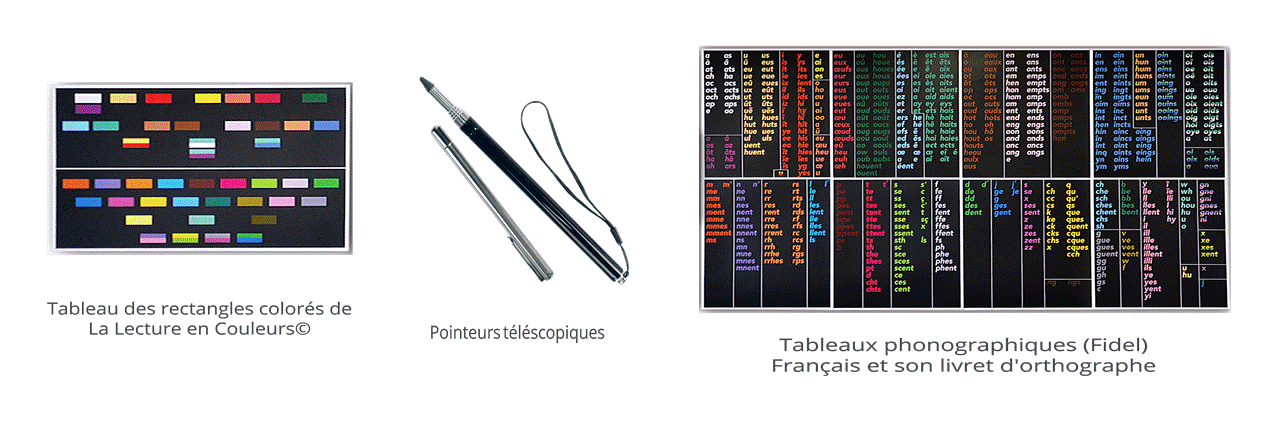
Photo credits: excerpt from the UEPD website
For more information: https://www.uneeducationpourdemain.org/langues-etrangeres/
3.4.3 The phonetic-gestural approach: the Borel-Maisonny method
In the late 1940s, Suzanne Borel Maisonny, founder of the speech therapy profession in France, proposed a method of speech therapy rehabilitation. This method was initially intended to facilitate learning to read in children with hearing impairments or dyslexia and dysorthographia.
Today, faced with the difficulty that some foreign learners may have in associating phonemes (what is heard), graphemes (what is seen) and articulation (what is said), more and more FLE trainers are using the Borel-Maisonny method.
This methodology uses the association of a phoneme, a gesture and a grapheme to facilitate memorisation. This method relies primarily on kinaesthetic memory by associating a gesture with each sound. The approach to phonemes is thus more instinctive: it allows learners to familiarise themselves more quickly with the sounds of French and gradually associate them with different spellings. In addition, this approach makes it possible to distinguish a sound in ways other than by hearing, which can be useful in cases where learners do not perceive certain sounds.
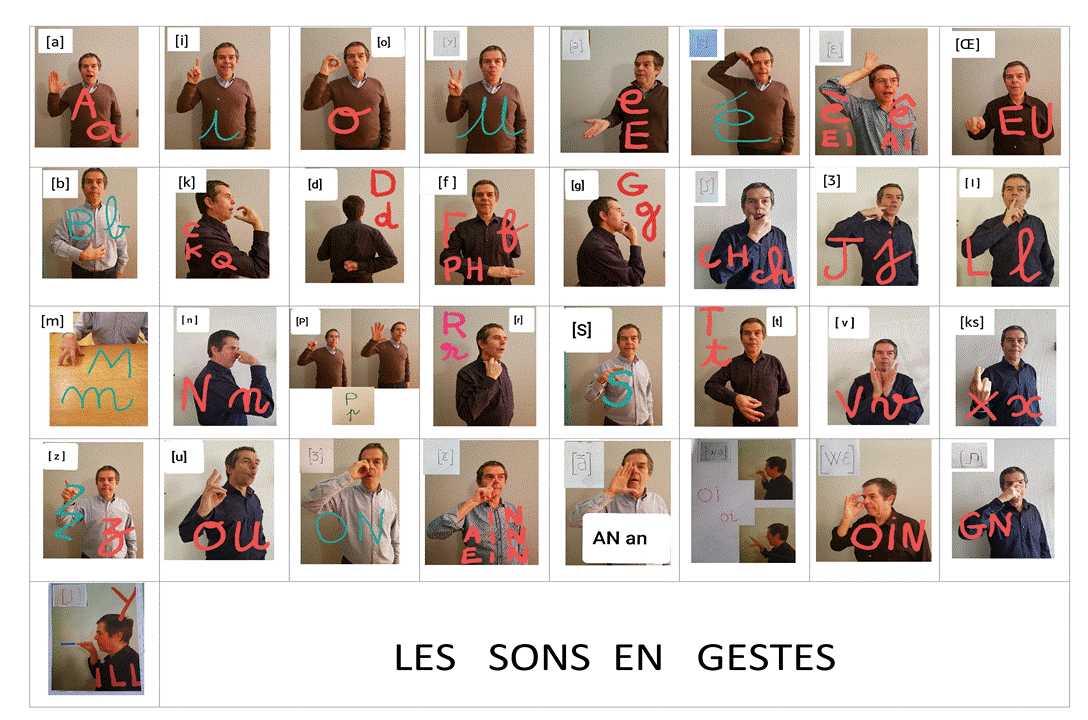
Photo credit: support from the À VOIX HAUTE association, Marseille. https://www.associationavoixhaute.com/
3.4.4 The Write, Communicate, Read, Express, Reflect (ECLER) method
This method teaches writing through free writing. It is aimed at people who already have some writing skills. The ECLER workshop provides a safe and encouraging environment for engaging in writing, while teaching linguistic norms such as grammar and spelling. It is an approach where the learner creates a free text, which serves as the basis for their learning. This process involves individual revision accompanied by the teacher, encouraging reflection and action through dialogue. The lessons learned are then consolidated through exercises based on the same text. Finally, the final version is shared with the group, emphasising that writing is an act of communication. This approach allows teaching to be tailored to individual needs while maintaining group dynamics, making it particularly suitable for groups with varying levels of proficiency.
Photo credit: https://www.editions-harmattan.fr/livre-ecrire_pour_apprendre_la_demarche_ecler_noel_ferrand-9782343043517-45095.html
Further reading:
- Ferrand, L’atelier ECLER, in Association française pour la lecture n°4, June 1993:
https://www.lecture.org/revues_livres/actes_lectures/AL/AL42/AL42P38.pdf
Collectif Alpha, Sélection bibliographique commentée pour ECLER, 2005:
http://www.collectif-alpha.be/IMG/pdf/Biblio_Atelier_ECLER.pdf
3.4.5 MaClé ALPHA: Action-oriented and communicative method for teaching reading and writing to adults in literacy programmes
This method is recent and is part of an action-oriented approach to literacy. It was designed by Marion Aguilar, a trainer of trainers and expert in the field of adult literacy. The manual combines reading acquisition and preparation for level A1.1 written of the CEFR.
The starting point is an audio recording (dialogue) that presents very concrete everyday situations. This method involves working with authentic documents. It starts with access to meaning, moves on to access to code, and ends with production and reuse, using a funnel approach.
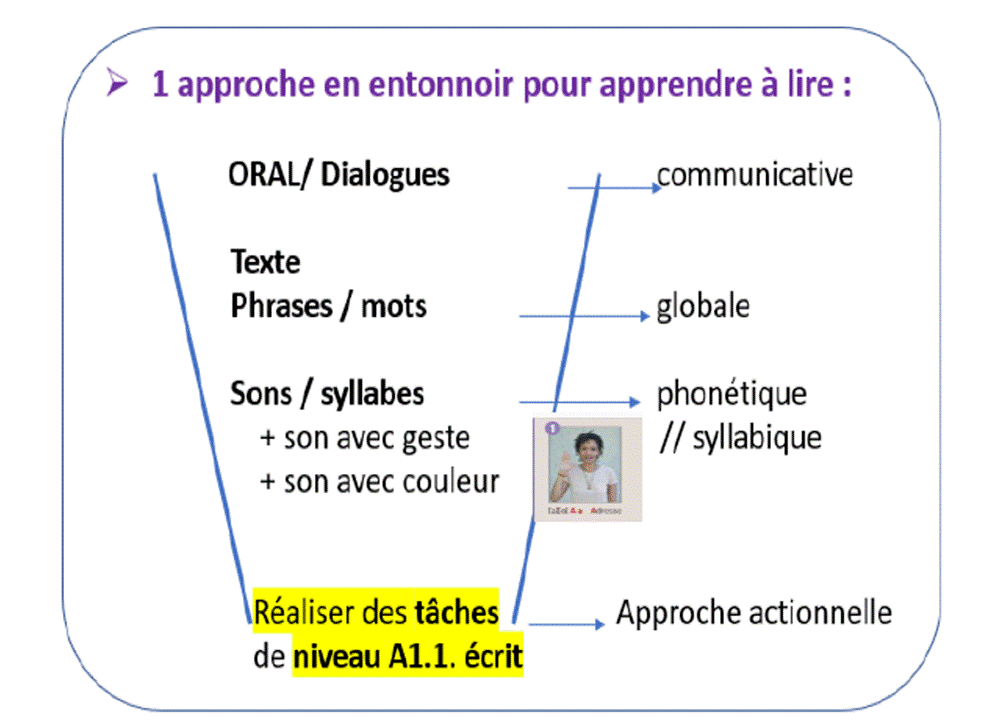
Source and photo credit: http://maclealpha.scolibris.fr/
The method consists of a textbook, a writing booklet, audio material and a trainer’s guide offering different teaching scenarios depending on the language profiles of the learners. It is very detailed and can be downloaded online.
Source and photo credit: http://maclealpha.scolibris.fr/
To go further:
Ma Clé Alpha, M. Aguilar, Scolibris-Retz, 2017
Accueil
3.4.6 Focus: learning to read in context
This method is also recent and is part of an action-oriented approach to literacy. It is specially designed for adults who are new to reading and is based on authentic materials taken from everyday life. The priority is on accessing meaning, but with a view to accessing the code. There is always work with audio materials, followed by reading activities and identifying key elements of the authentic material, manipulating authentic materials by extracting words (working on alphabetical order, phoneme/grapheme segmentation) and linear (global) reading of the words learned. It is a very functional approach.
For further information:
RADYA website: http://www.aslweb.fr/ressources/
In short, there are many methods that can be used depending on the teaching and learning context. It is therefore up to the trainer to choose the one(s) that are most appropriate. Combining several teaching methods will cover all aspects of learning to read and provide beginner readers and writers with different tools that they can use to continue learning outside the classroom.
3.5 Trainers: what approach should they take?
Beyond the methods and approaches used by the teacher in the literacy workshop, it is the role of the trainer and their approach that are important factors in the transmission of these tools. In adult education, we talk about andragogy, “the art of teaching adults”, as opposed to pedagogy, “the art of teaching children”, insofar as adults have specific needs in their training/learning.
In practical terms, during the activities offered, this translates into different approaches that trainers need to adopt. On the one hand, adult learners need to know why they are learning. The teacher must regularly remind them of the purpose of each activity, why it is being done and how it can be repeated at home. The “summary” sessions at the end of each session are important moments in the learning process, as they allow participants to review what they have worked on, what they have learned from the session, what was difficult and what was easy, what needs to be reviewed in a future session, etc. We also recommend regular reviews, for example every four sessions, in order to consolidate learning. On the other hand, trainers must contextualise the learning. For each of the activities proposed, it is necessary to make connections with reality, to show learners how it is possible to immediately transfer what they are learning to real life, everyday life and work situations. Another way to contextualise is to work with authentic documents, i.e. excerpts from their daily lives, which they are constantly confronted with. No document is too difficult to read or understand. Using them allows you to teach the language that is commonly used in everyday life and is omnipresent in the learners’ daily lives. It is strongly recommended that learners be asked to bring in documents or text messages they receive that they have difficulty understanding (prescriptions, administrative letters, messages from school, etc.). All of this material can be used as teaching aids. The teacher should take care to anonymise all documents before turning them into teaching materials.
Beyond what happens in the classroom and the methods and tools used, the teacher must constantly reflect on their teaching approach, working closely with their learners and their needs.
There is no set path to reading. Each learner charts their own course, based on their life experiences, their schooling or training, and their native language(s), all of which shape their perceptions of the written word and of themselves as learner readers.
Taking into account the experiences of each learner is an important factor that should not be overlooked. Learners are not ‘blank slates’; they have a history, knowledge, skills and competences. All of this acquired knowledge and these skills must be drawn upon and highlighted. The aim is to build on what is already there in order to offer tailored, supportive and open training. This approach helps to demystify the act of reading by making it accessible.
Based on this observation, it seems to us that teachers can only guide learners by paying close attention to each individual’s achievements and needs. In order to offer a truly tailored teaching approach, teachers must analyse the mechanisms used by novice readers and try to understand the logic behind each individual’s approach. This logic must be linked to the reading strategies developed by novice readers in order to make sense of the written word. It is therefore a question of unravelling the unconscious processes at work. This approach naturally requires taking a step back from one’s own assumptions and putting one’s relationship with the written word, which is the product of one’s own history, into perspective. What is obvious to the teacher, as someone who has been to school, must be constantly questioned. Otherwise, there is a risk of misinterpreting what the learner is doing or saying.
The teacher must work with the learner and not in their place. It is necessary to engage in dialogue with the learner, with a view to co-construction, the challenge being to discuss what works and what does not work, and to reflect together on how things can be done differently.
The teacher will thus negotiate learning objectives as the course progresses, with an emphasis on dialogue.
We can summarise the first set of actions that trainers should always keep in mind as follows:
Quizz
Question 1
Answer TRUE or FALSE.
Teachers must take into account the diversity of learners’ educational backgrounds.
O True O False
Question 2
Choose the correct statement.
Learners classified as “alpha learners” are…
O learners at beginner level in oral communication.
O learners who are illiterate
Question 3
Choose the 2 correct answers.
Unlike learners who are illiterate, learners classified as FLE…
O can read and write in their mother tongue.
O speak but do not write in French.
O have been educated in a language other than French.
Question 4
Answer TRUE or FALSE.
For adult migrants, learning French is primarily about learning to communicate in French and not just about deepening their knowledge of the language (grammar, conjugation, spelling, etc.).
O True O False
Question 5
Answer TRUE or FALSE.
A learner may have different levels of proficiency in speaking and writing.
O True O False
Question 6
Choose the 2 correct answers.
What are the two important elements for offering a course that focuses on oral skills?
O Use of images O Tables
O Only chairs O Written material
O Written questionnaires
Question 7
I can practise my grammar skills orally:
O True O False
Question 8
Sequences of several sessions should be built around:
O a theme
O a linguistic objective
O several themes
Question 9
When we talk about the mechanisms of learning to read, what is addressing?
O I reconstruct words by combining letters. My auditory sense can help me. This is the preferred method of “decoders”.
O I know the word, so I retrieve it directly from my memory. Visual cues can help me. This is the preferred method of “meaning seekers”.
Question 10
When we talk about the mechanisms of learning to read, what is assembly?
O I reconstruct words by combining letters. My auditory sense can help me. This is the preferred method of “decoders”.
O I know the word, I can find it directly in my memory. Visual aids can help me. This is the preferred method of “meaning seekers”.
References
Theoretical contributions:
- Beacco, J.C, Tagliante, C, Lhote, G, DeFerrari, M. Level A1.1 for French, reference framework and certification. Paris: Didier FLE.
- Adami, H. (2020). Teaching French to adult migrants. Paris: Hachette, F collection.
- Cicurel, F. (1991). Interactive reading. Paris: Hachette.
- Cornaire, C. (1999). Focus on reading. Paris: Clé International.
- Understanding, reflecting on and acting in the world: Guidelines for popular literacy. Educational reference framework from Lire Ecrire Belgique (2017): https://lire-et-ecrire.be/IMG/pdf/balises_pour_l_alphabtisation_populaire.pdf
- UNESCO documents: https://unesdoc.unesco.org/ark:/48223/pf0000136246_fre
- Freire, P. (1974) Pedagogy of the Oppressed. Paris: Maspero.
- Jaffré, J.P. (2004). Literacy: history of a word, effects of a concept. In: Barré-De-Miniac, C, Brissaud, C. & Rispail, M. (eds.). Literacy: theoretical concepts and practical approaches to teaching reading and writing. pp. 21-41.
- Torunczyk, A. (2000). Learning to read and write among adults. Paris: L’Harmattan.
- Vadot, M. (2017). French, a language of ‘integration’ for adult migrant speakers of other languages? Power relations and meanings of a controversial lexeme in the field of language training (thesis).
- Publications by the Alpha Belgium collective, available on their website: https://www.collectif-alpha.be/
Additional textbooks and methods for literacy
- ASL WEB website: http://www.aslweb.fr/ressources/
- Focaale fact sheets on the France éducation internationale website: https://www.france-education-international.fr/article/focaale-fiches-pedagogiques?langue=fr
- Au boulot 1 & 2, Alpha A voyelles et alpha B consonnes (2018), G. Mercadier and V. Vermurie, Français pour adultes editionhttps://francaispouradultes.fr/page_principal/livres.php
- Savoir lire au quotidien (2005), O. Benoît-Abdelkader, A. Thiebaut, published by Hachette FLE
Literacy apps
- J’apprends: http://j-apprends.fr/
- Solodou: https://solodou.com/
- Ardoiz magik (Graphic gestures, reading/writing in cursive)
Resource platform
- http://www.aslweb.fr/
- https://migrants-fle-quilt.fr/
- https://www.coe.int/fr/web/language-policy/adult-refugees
Textbooks and methods for teaching oral skills to migrants in France
- Bagages: manual for French as a foreign and second language, Valérie Skirka and Mahacen Varlik. Publishers: Coallia / Zellige – 2019. https://coallia.org/coallia-sengage/manuel-bagages/
- Ensemble, Level A1.1 – French course for migrants, Dorothée Escoufier, Philippe Marhic, Elodie Talbot. Publisher: Clé InternationalFocus, Words in situations A1-B2, Véronique Laurens, Elisabeth Guimbretière. Publisher: Hachette FLE 2015
- Comprendre et parler (Understanding and Speaking) kit by V. Juanis. Project led by Lire et Ecrire Bruxelles. https://www.comprendreetparler.be/
- Easy French podcast: https://www.podcastfrancaisfacile.com/
- Easy French with RFI: https://francaisfacile.rfi.fr/fr/exercices/a1/
- Learn French with TV5 Monde: https://langue-francaise.tv5monde.com/
- Teaching French to migrants with TV5 Monde: https://enseigner.tv5monde.com/articles-dossiers/dossiers/enseigner-le-francais-un-public-migrant
To listen to
- Audio binge: the French language, a model for integration? https://www.binge.audio/podcast/parler-comme-jamais/la-langue-francaise-modele-dintegration
- J. Piron, A. Hoedt (2017). La convivialité, La faute de l’orthographe. Paris: Textuel Publishing
- TedX conference: https://www.youtube.com/watch?v=5YO7Vg1ByA8
Authors
Adèle Rossignol – Elsa Aïch
Aix-Marseille University